I’ve written extensively about Minimum Viable Products (MVP), which is a powerful approach to building a new product with enough features to attract early-adopters and validate a product idea at the beginning of the product development cycle.
The problem is that users are no longer easily impressed by simple tech. Or ugly tech.
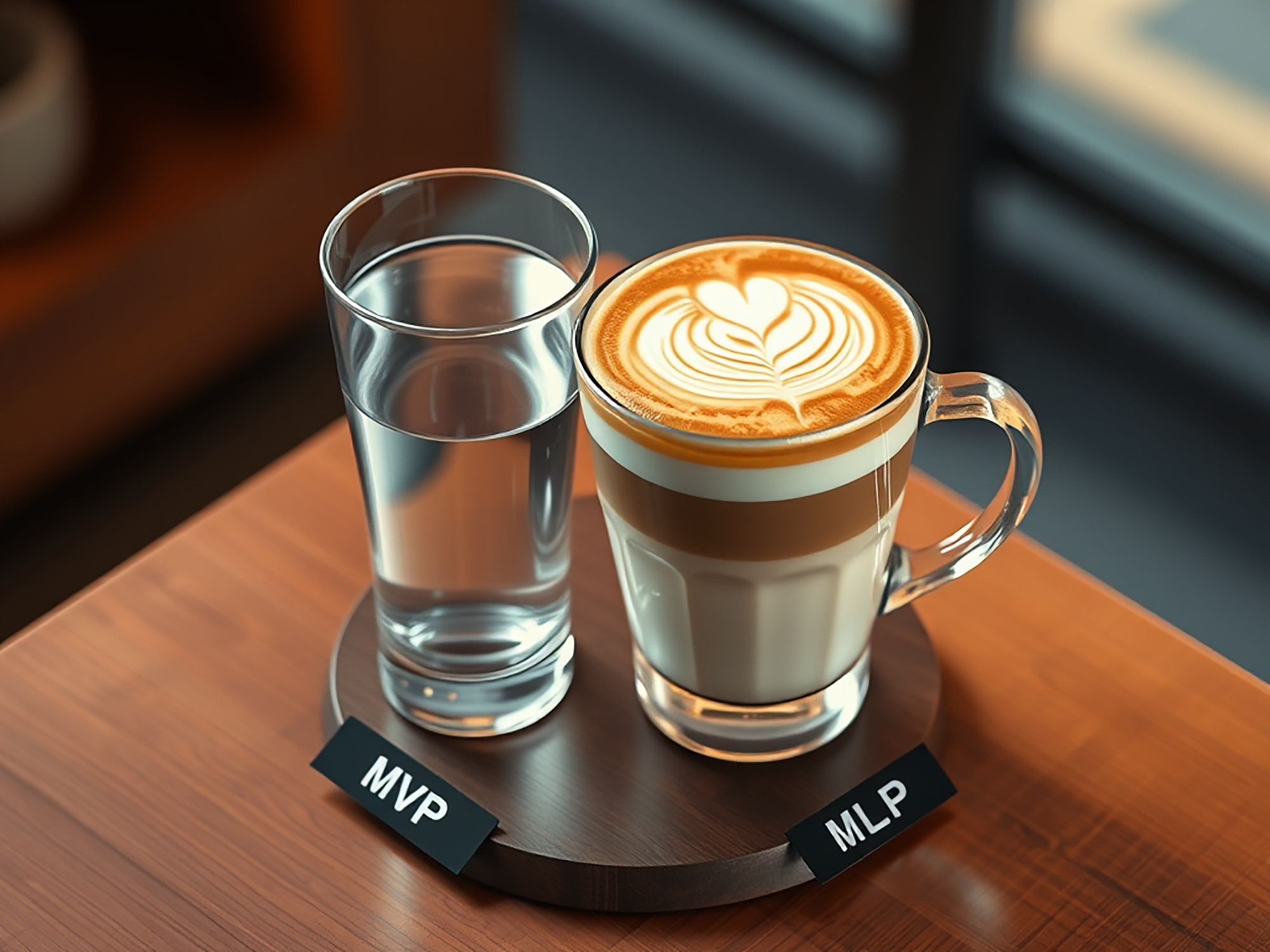
This has led to the rise of the Minimum Lovable Product (MLP).
The History of MVP’s
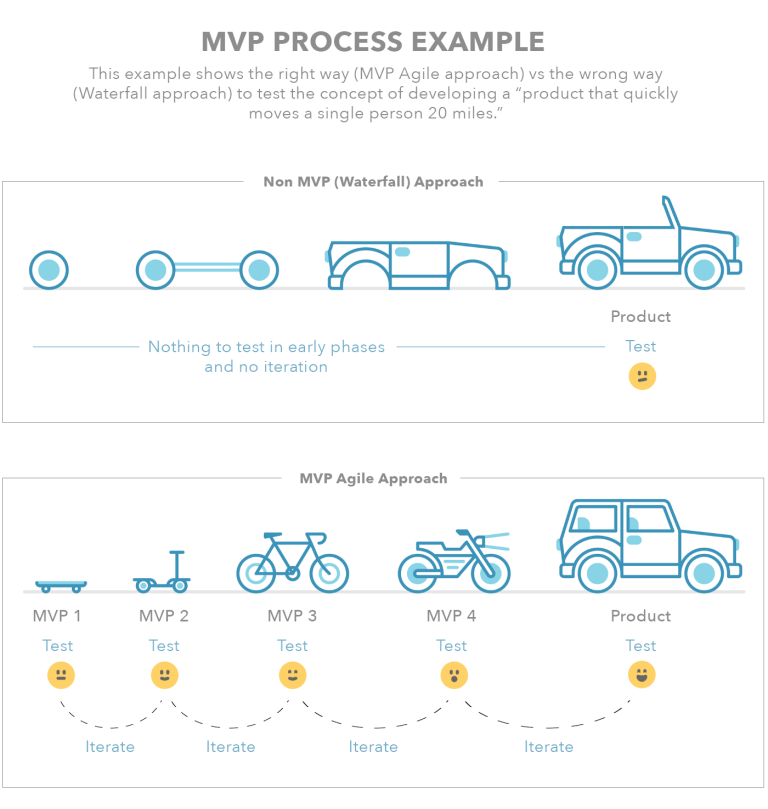
MVP’s helped organizations create “test” versions of their products in order to quickly get it into the hands of their target users to gather feedback and understand whether the core idea of their product worked. In Agile product development, this lessens risk and allows teams to iterate more quickly, rather than building a fully idealized product only to have it fail.
MVP’s worked for the last 20 years, but the rise of advanced technologies & tools, the maturity of product design, and the new generation of digital natives have redefined the expectations for the tech market. Consumers have access to a ton of – and are creating their own – high-quality games, content, and experiences from all of their devices.
So if you’re going to sell something, it has to be on par with what they’re creating on their own. This is how MLP’s help startups to focus on delivering product experiences customers love rather than getting to market as fast as possible with a subpar MVP.
What is an MLP?
A Minimal Lovable Product is the first version of a product that’s designed to not only solve a problem, but also to delight users and foster a positive emotional connection.
This means going beyond the basic functionality of an MVP.
It’s more than just making a product functional, it also has to be reliable, usable, and pleasurable from the initial launch. This usually requires more time, money, and resources.
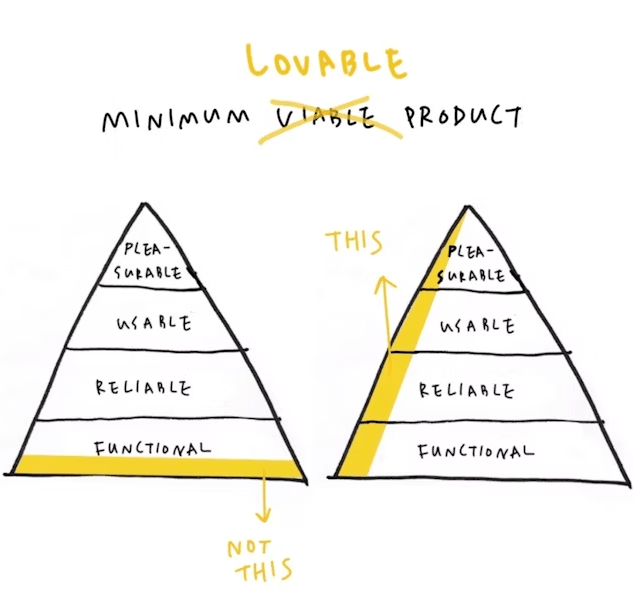
Mainly because an MLP requires deep discovery to understand what your customers care about, as well as their problems and needs. And from these insights you’ll know how your digital product can make their lives better by solving key problems.
You’ll also need to consider the customer experience (CX) as a whole and strive for love at every stage. As a result, customers will not only purchase your product or service — but they will also want to see your company thrive.
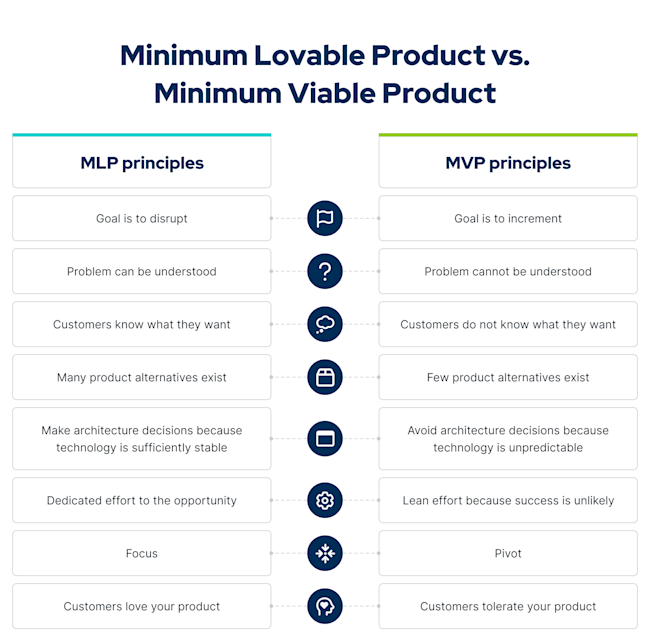
However, I should caution you that building an MLP is not easy.
It will force you to weigh your options when building your product and/or UX strategy, because MLP’s typically take longer to build, are more expensive, and generally are built to disrupt saturated markets where you’re trying to distinguish your brand and user experience above others. It also requires more expertise across product development – from early stages through deployment – which includes marketing/branding, CX, user research, and customer service.
The Benefits Of MLP
There’s a lot of benefits of building an MLP, including:
- Stronger User Engagement – Instead of just meeting basic functionality, an MLP excites and resonates with users, increasing adoption and retention
- Faster Validation & Feedback – By launching a lovable experience early, teams can quickly gather insights, iterate, and refine based on real user reactions
- Competitive Differentiation – A well-designed MLP helps a product stand out by delivering an experience that users emotionally connect with, not just tolerate
- Efficient Resource Allocation – Prioritizing delight alongside core functionality ensures development efforts focus on features that drive long-term success.
- Increased Virality & Advocacy – A product that users love is more likely to generate word-of-mouth marketing, fostering organic growth and community engagement.
How To Evolve Your MVP Into An MLP
I believe MLP’s are leading the way forward because nowadays you need to bring a little life to your product and let people love it.

Here’s how to transform your MVP into an MLP:
1. Bring design to the table early – Rather than building your product and then handing it over to your designers to “make it pretty” at the end, work with them from the start. Even if it’s best working product in the world, with terrible UX design, it’s doomed to fail.
2. Build your community – Having a loyal and enthusiastic community is a gold mine for any company. Work with your marketing team to create online spaces for your users.
3. Tell your story – Focus on telling your “why” (vs the “what”) by weaving it into the very fabric of your product
4. Gather the right qualitative feedback – Lovability is subjective, but that doesn’t mean it can’t be data-driven, so listen to your customers when they tell you how they feel about your product. Give them what they want, as well as what they need.
5. Remember the ‘M’ in MLP – The focus here is still to launch the minimum in case you need to pivot. Focus on lovable features and design work that aren’t cost-intensive.
Conclusion
MLP’s are the future for those that want to foster deeper emotional connection from the initial launch with a product that’s not only functional, but also reliable, usable, and pleasurable.
Does that mean MVP’s no longer have a place in product development? Of course not. They’re a valuable first step and a great way to validate your idea. If you’re low on resources, it’s better to ship something than nothing at all.
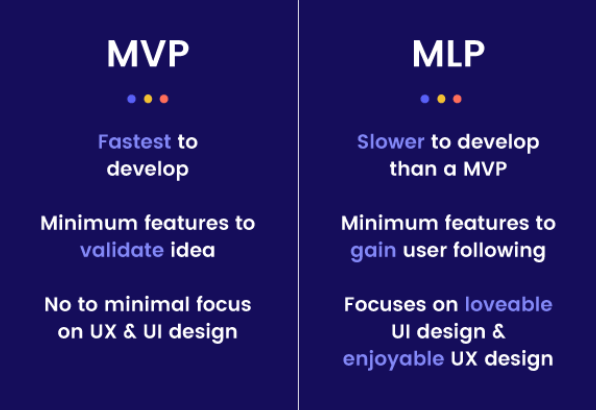
The great thing about MLP’s is that development teams now have options to better position themselves as disruptors in saturated markets. This is where brand and user experience really matter if you’re trying to steal customers from entrenched competitors.
With so much competition and new startups entering every market daily, developing MLP’s will be a significant competitive advantage for startups in the years ahead.
One thought on “From MVP to MLP: Transforming Product Development”