


I always roll my eyes anytime someone mentions the word “governance” in any of the tech companies I’ve worked at.
This is because I tend to see any form of governance as slow and confusing, and the antithesis of rapid growth, creativity, and flexibility.
However, I’ve changed my ways now that I’ve worked with design systems. I’ve seen how good governance can foster scalability and creativity if properly implemented while maintaining design and usability consistency.
Let me show you what good governance can do for you design systems and product teams…
Design System Fundamentals
The foundation to any good design system is Atomic Design, which is a design methodology created by Brad Frost for creating robust design systems with an explicit order and hierarchy. This methodology was derived from a basic chemistry concept; the composition of all matter.
In the atomic world, three fundamental particles (atoms, molecules, and organisms) make up everything we see.

Design systems should work the same way.
I always recommend using a strong foundation of essential building blocks rather than an overwhelming list of rigid components. Those foundational elements create structure and meaning, inviting teams to build within it.
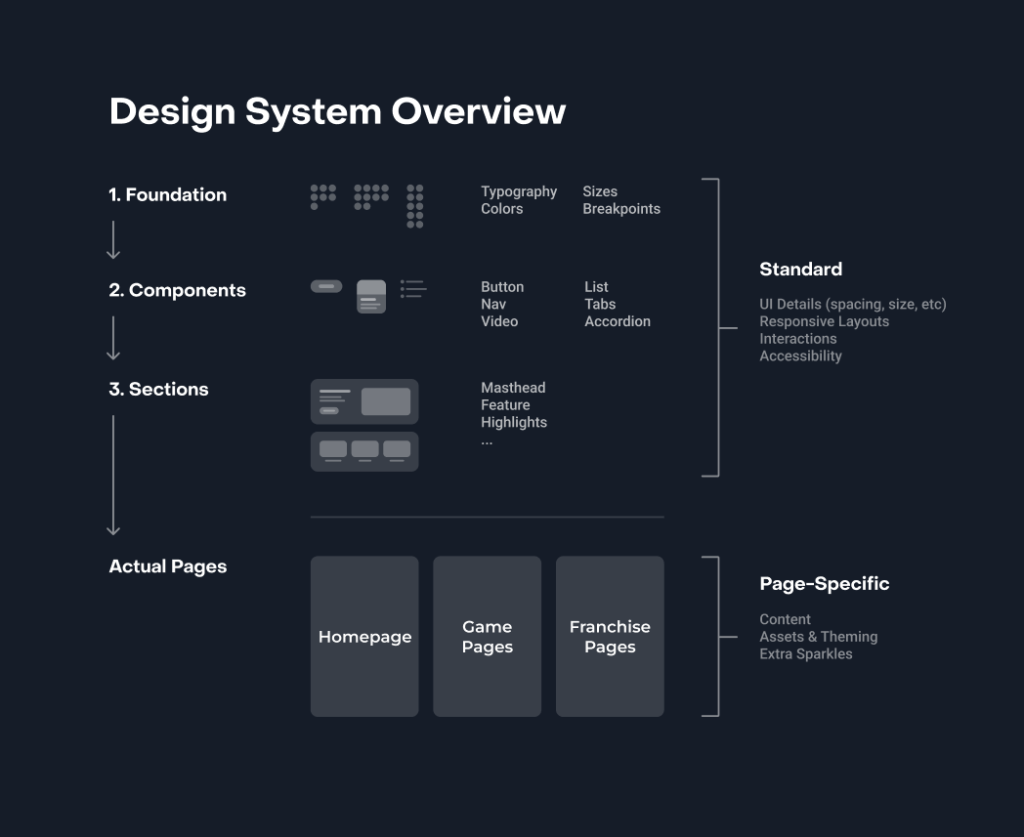
Beyond the foundational elements, there are four primary scenarios where a design system requires changes or updates. These scenarios require a submission process where teams must ask a series of questions and tests before prototyping or requesting amendments. It’s important to consider these when developing your governance framework, as these touch points will likely be impacted.
- Releasing design system updates – Rather than releasing new updates when they’re ready, teams must establish a release schedule for updates. A strict release schedule ensures teams follow quality assurance and documentation processes correctly.
- Introducing new elements – Establishing a workflow for adding new elements ensures design system integrity while providing every team member with an equal opportunity to make additions.
- Promoting patterns – Patterns fall into two categories: one-off or best new practice. Teams must test these new patterns against what’s currently available before promoting them.
- Reviewing and adapting patterns – Every design system must have a team (at least two members) to review patterns before release. This review process ensures new elements meet the standards and practices of the current design system.
Now that you’ve got a good understanding of design systems, I’ll provide my recommendations for design system governance that encompasses the 3 key areas: components, operations for the design system team, and the governance plan.
Let’s get started…
Governance Key Area #1: Managing the Components within the Design System
Components are a key element of design systems, so this is a great place to start when thinking about governance. Here’s the main items you’ll need to consider:
- Determining what qualifies as a component
- Deciding when a component is added to the library
- Outlining the process for submitting and reviewing contributions
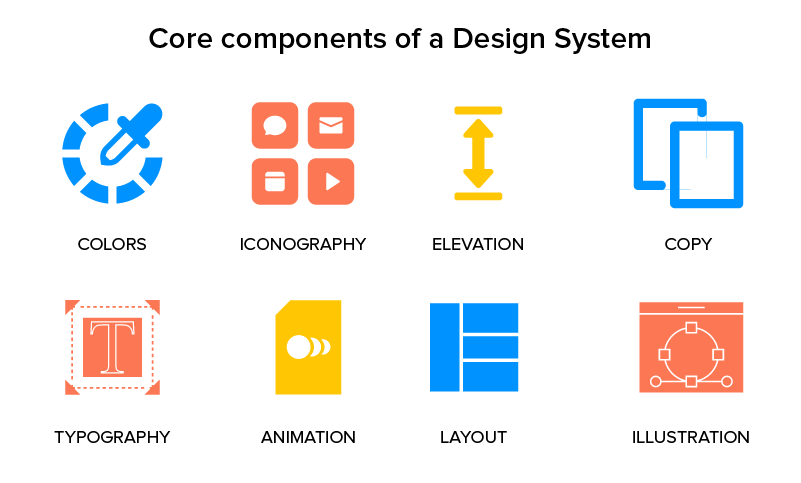
- Specifying the necessary documentation for each element, such as usage guidelines, functionality details, animation specifications, and accessibility standards.
Governance Key Area #2: Design System Team Operations
How the design system team operates is essential part of governance planning and baking in the design process early on. The governance model addresses:
- the frequency of team meetings
- the essential factors that contribute to the team’s effectiveness,
- the decision-making process, as well as identifying the stakeholders and decision-makers.
Governance Key Area #3: Guidelines for Developing a Governance Plan
The governance plan refers to the processes and structures that I’ve used to keep things running efficiently over time.

Here are the key things I recommend when designing your governance plan:
1. Ownership
- Assign a clear owner or team to maintain and update the design system
- Involve the broader design community so everyone can contribute and stay aligned
- Avoid overly rigid control or leaving decisions ambiguous — aim for balanced, collaborative ownership
- Prevent decisions from defaulting to the “HIPPO”; ensure all voices are heard
2. Policies & Strategy
- Define a clear governance model outlining how decisions are made and what policies the system follows
- Establish both high-level strategies and micro-strategies (e.g., component criteria, content voice and tone)
- Use strategy to guide consistency, quality, and long-term success
3. Standards & Guidelines
- Create clear rules for naming, colors, components, usage, and overall design consistency
- Ensure standards act as guardrails while remaining flexible and open to evolution
- Update guidelines as the system grows and matures
4. Documentation
- Document how to use the system, request changes, contribute, and report issues
- Maintain an up-to-date governance playbook for clarity and smoother collaboration
- Use tooling (e.g., ZeroHeight) to keep documentation organized and accessible
5. Communication
- Keep teams informed about updates and changes through newsletters, blogs, or Slack posts.
- Ensure transparent communication so stakeholders understand impacts and stay aligned.
- Consistent communication supports repeatable processes and informed decision-making.
6. Metrics
- Establish measurable goals to track the system’s effectiveness and guide improvements.
- Useful metrics include:
- Adoption rate: How widely the system is used.
- Consistency: Visual and UX alignment across products.
- Time-to-market: Speed improvements enabled by the system.
- Efficiency: Reduced design/development effort.
- Cost savings: Lower design and development costs over time.
Building a Healthy Culture to Support Governance
Beyond the 3 key areas outlined above, you’ll also need to develop a culture to support the governance framework. And this requires building trust with the teams and people you’ll collaborate with.
I’ve always said that trust building is just as important as components and patterns because it drives adoption and advocacy.
So here’s a few of my thoughts on the various approaches that worked for me in building these relationships as part of a continuous and responsive effort.
- Start by ensuring your process is collaborative across all the teams impacted as well as all disciplines. This includes PM’s and engineers. They play a critical role in the development, maintenance and governance of design systems, if not more so than design.
- Ensure you celebrate the victories, no matter how big or small. These celebrations not only build momentum but also help people feel like their work matters. It reminds everyone that the system is not just a tool but something you’re building together.
- Be responsive to requests and inputs, and always keep an open line of communication and make collaboration easier by not burdening the contributors with extra responsibilities.
- Keep your governance flexible so that the design system is not exclusionary. In doing so, you can invite others to collaborate and work with you on the design system. That way, you will gain different perspectives and be able to develop a design system shaped by real user needs, rather than just a standard set of components and patterns.
The ongoing nature of a design system means that the more people you have to support and advocate for it, the better. If you build a certain level of trust with your users, the design system stops being just your design system – it becomes everyones.
Conclusion
My recommendations boil down to three interconnected pillars: thoughtful management of components, clear operations for the design system team, and a living governance plan that guides decisions without stifling creativity.
But here’s the truth I’ve learned the hard way: no governance model survives without the right culture. The most elegant processes fall apart if trust is low or collaboration feels forced. Build a culture where contribution is celebrated, feedback is kind and candid, and everyone – from IC’s to executives – feels ownership in the system’s success. When people believe in the “why,” they embrace the “how.”

So invest in that culture early. It’s the invisible glue that turns governance from paperwork into a competitive advantage, and keeps your products feeling human, cohesive, and unmistakably yours, no matter how big you grow.
And remember, good design system governance isn’t about control or scale, it’s about relentlessly prioritizing users over short-term growth or profits. When your system puts consistency, accessibility, and intuitive experiences first, everything else (faster shipping, happier teams, stronger business outcomes) follows naturally.
Govern it wisely, and it will reward you for years.
One thought on “Key Elements of Effective Design System Governance”