

There’s a major transformation happening in product development that has major implications on how products are designed in 2026 and beyond: designers will no longer create fixed interfaces.
I believe we’ll see a major transformation in the world of product development, where we start to design products for intent.
No more funnels. No more customer journeys. Now we’ll need to design for each user’s specific intent! Sounds crazy, right?
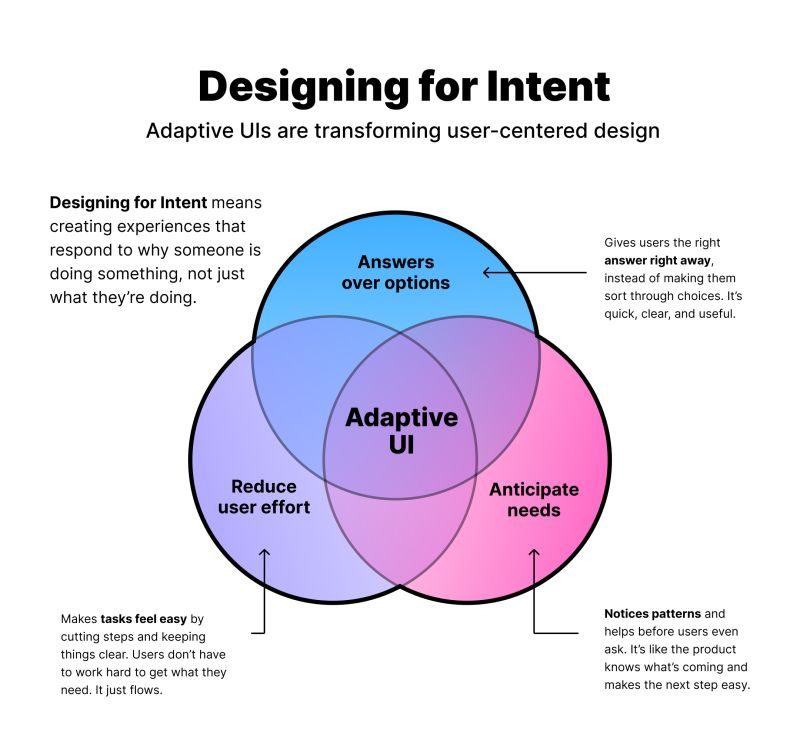
What is Designing for Intent?
This means creating experiences that recognize, respect, and respond to what a user is actually trying to accomplish. And not what your product wants them to do, not what features exist, and not what the system assumes.
It’s an extraordinary shift from designing interfaces to designing outcomes.
Generative systems do not follow pre-built screens.
They follow patterns, predictions, and signals. This means that instead of designing for every step of a funnel, we are designing the conditions a system uses to decide what to show, what to emphasize, and how to adapt.
To design for context, we need to:
- Understand user habits and timing
- Map intentions, not just actions
- Consider edge cases where the AI might get it wrong
- Define how the system fails gracefully without frustrating users
How Do We Understand Users’ Intent?
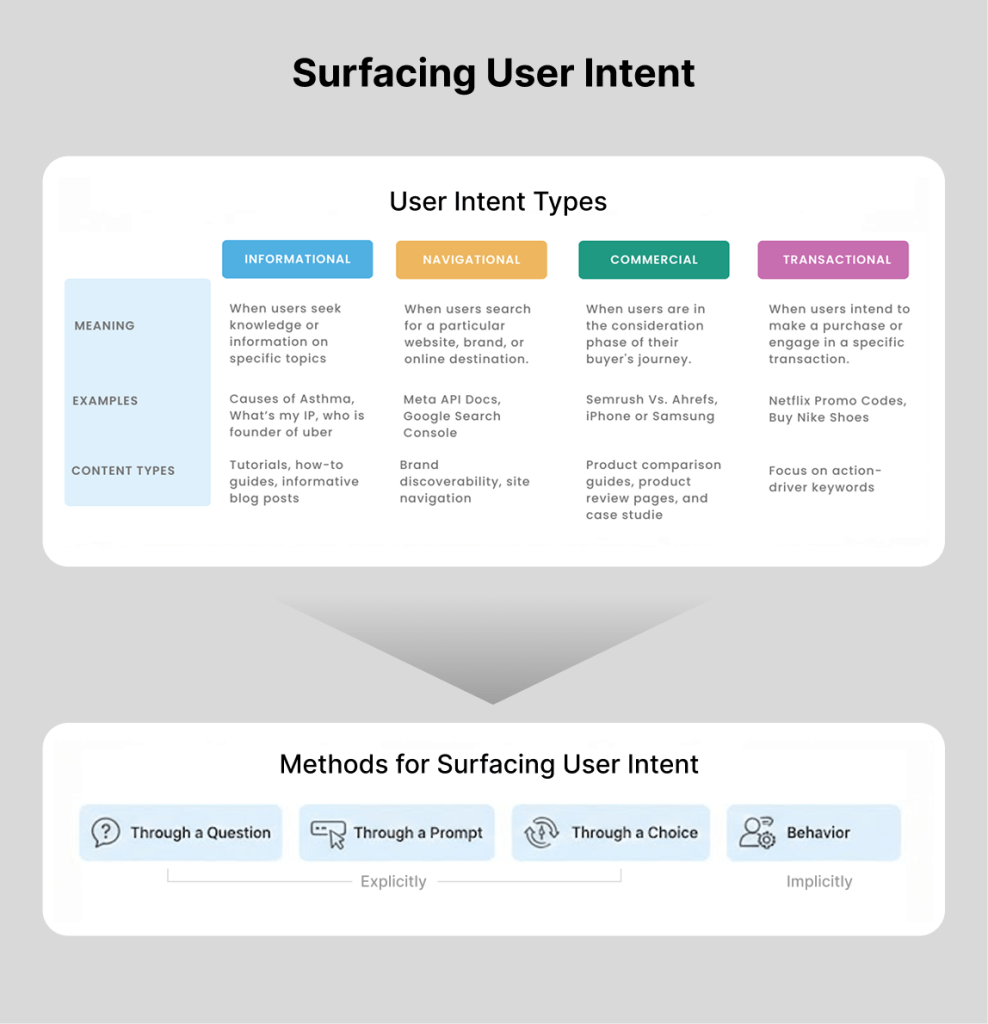
In generative experiences, there’s four primary types of user intent:
- Transactional – When users intend to make a purchase or engage in a specific transaction
- Informational – When users seek knowledge or information on specific topics
- Navigational – When users search for a specific website, brand, or online destination
- Commercial – When users are in the consideration phase of their buyer’s journey
Google’s PAIR guidebook talks about this distinction between explicit intent and intent inferred from behavior, which forms the basis for how AI predicts what comes next.
Once the system infers intent, it predicts what the user needs next. That prediction determines what gets generated, whether that is a layout, a set of recommendations, content variations, or the next step in a flow.
The most exciting thing to me is that every user will potentially see something different based on their intent!

How Designers Can Optimize the Generative Experience
With AI, there’s no guarantee the system gets it right every time, so we need a way to tell when it actually worked.
That’s why I always make the system’s reasoning visible – similar to Grok’s reasoning example below – and tie everything back to clear goals and signals by defining what “good” looks like in the real world.
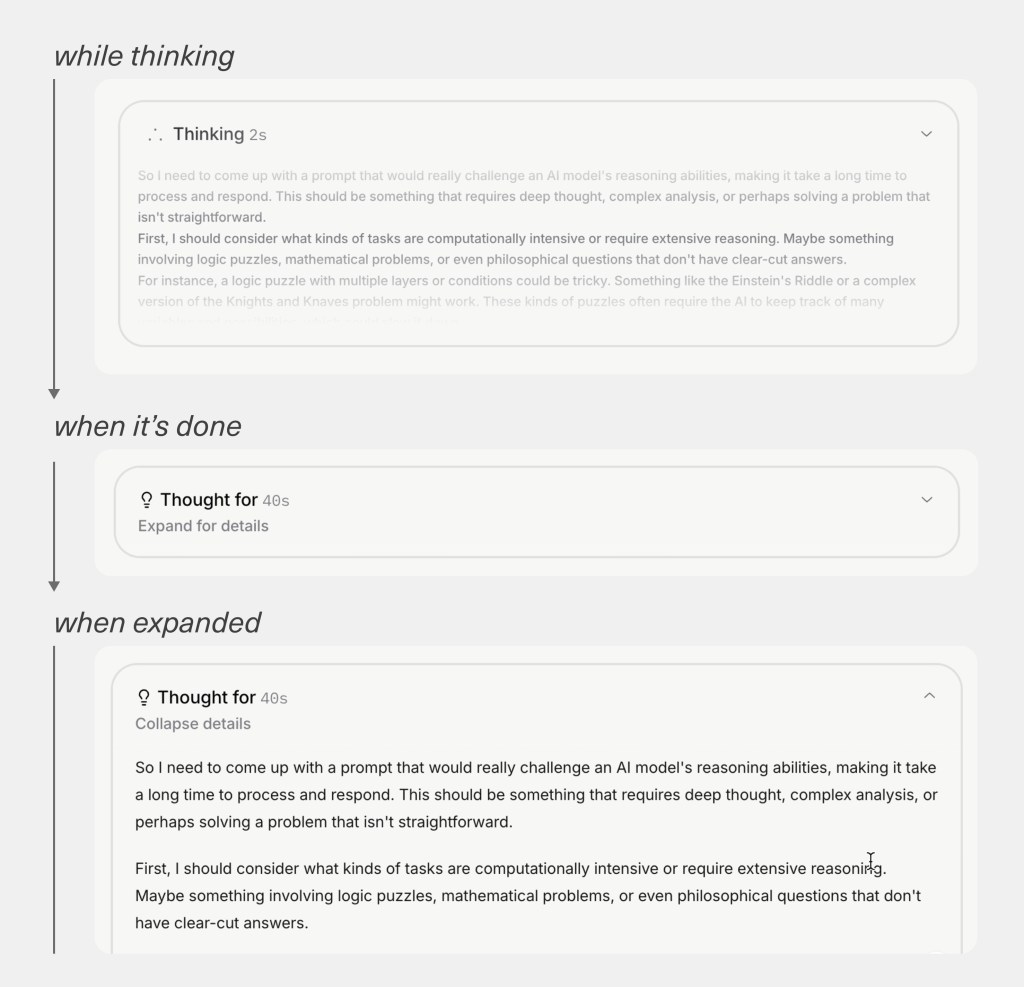
Designers should no longer judge success by how a screen looks compared to the old one, but by how users behave. If they move forward, stay engaged, and accomplish what they came for, the system made the right call. If they hesitate, ignore it, or bail, it didn’t.
It’s less about pixels now and more about whether the experience genuinely helped someone get where they wanted to go.
Microsoft’s Human-AI Interaction Guidelines reinforce this by encouraging systems to make their reasoning visible and understandable, so people can verify whether predictions make sense.
This is where the framework becomes essential, where we can use organizational goals, OKRs, and KPIs to give us a standard for what “good” looks like. They describe the journey and the progress that represent value for users. The signals we instrument become evidence of whether the generated experience actually supported that progress.
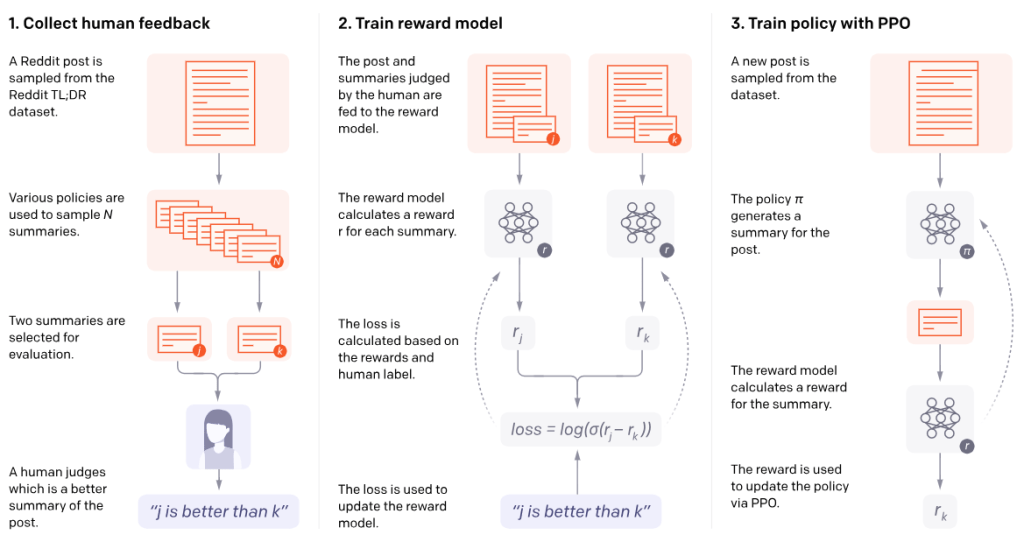
Even when a generative system produces something entirely new, we can still evaluate it. We are not comparing the UI to a previous layout. We are comparing behavior to expected signals. If users are moving forward, the inference was correct. If users hesitate, ignore content, or abandon, the system has made the wrong assumption. OpenAI describes a similar idea in their work on learning from human feedback, where systems compare predicted outcomes to desired ones.
This gives designers two places to focus optimization efforts. We can refine the experience that was generated, or we can refine how the system infers intent.
Sometimes this means improving interface patterns. Sometimes it means strengthening the signals we collect. Sometimes it means giving users clearer ways to express what they want.
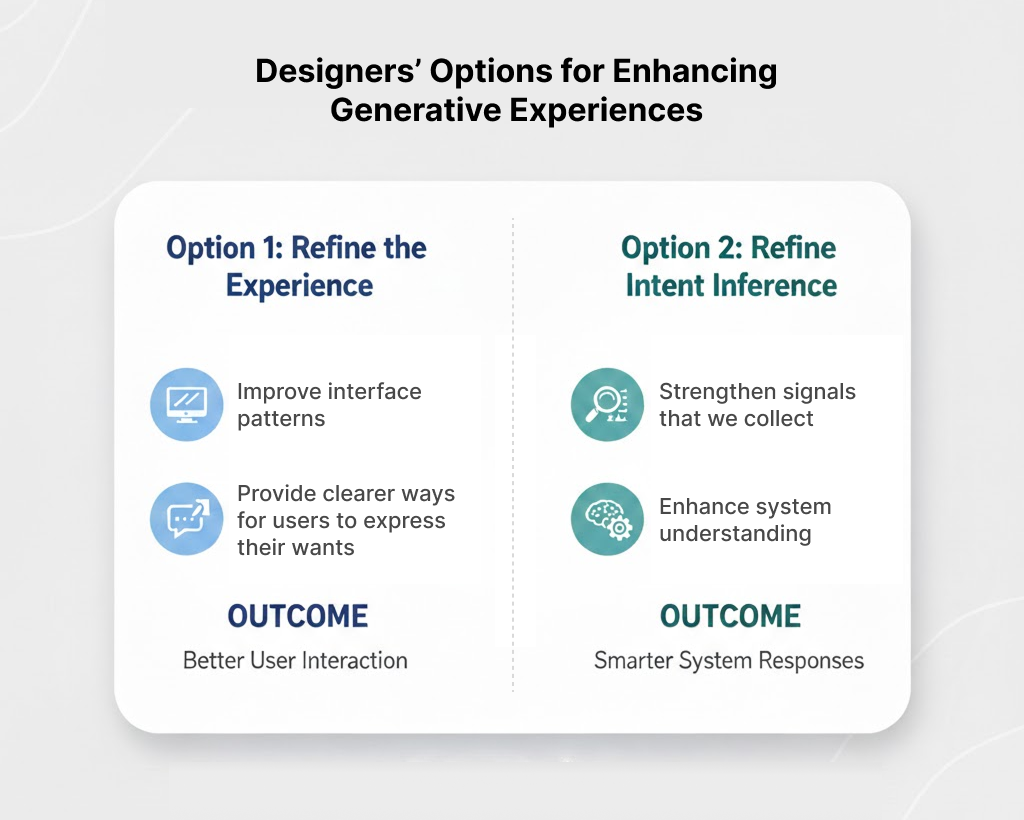
Either way, the work becomes the same. We check the signals produced by a generative interface against the expected signals tied to our goals and success metrics, and we use that comparison to guide how the system adapts.
Conclusion: Designing for Intent
This is how I envision designers contributing to AI-driven experiences. We are not only designing what users see. We are designing the understanding the system relies on to generate it.
This requires designers to shift our focus from:
- Features to flows of understanding
- Layout to logic
- Aesthetics to intent
And yeah, that means designers need new muscles: empathy, systems thinking, intent modeling, and even psychology. But if you embrace that, you’re not just shaping interfaces – you’re shaping how people interact with technology at its deepest levels.
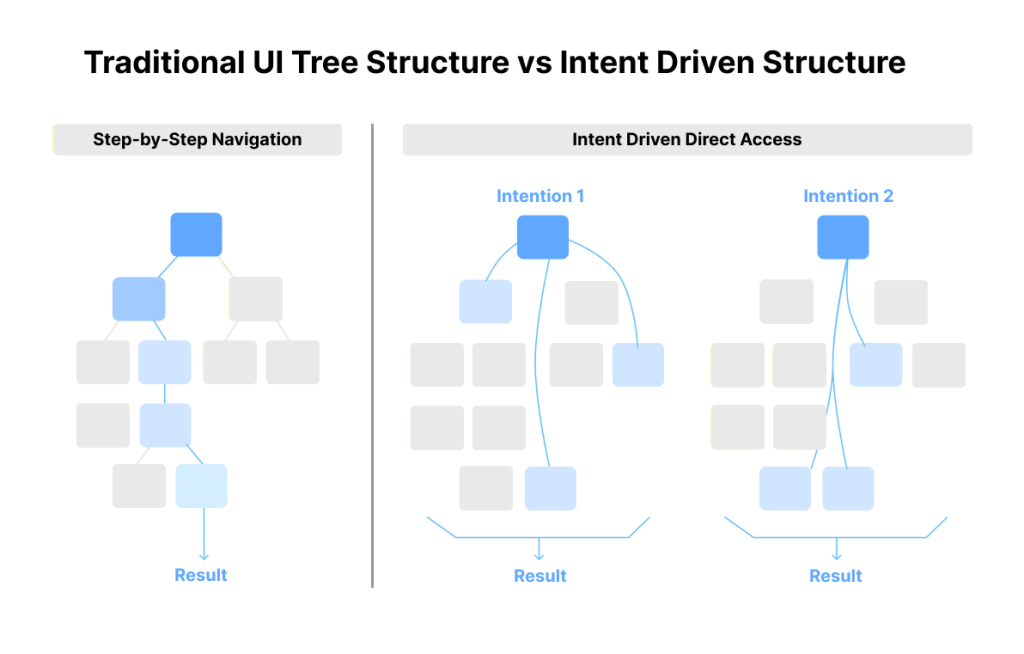
One last point to make: in the short term, I believe the companies that have already created traditional tree structured flows in place will do better than those who design solely for intent. That’s because I see this shift taking years before people fully embrace designing for intent.
For me, designing for intent is fairly similar to pushing users to use the search function on a website or mobile app – users rarely use the search function unless their completely stuck.

People love the visceral aspects of websites and apps, they love to explore and look around. To seek out information. To be entertained. And focusing product experiences on AI enhanced “search” is a little, well, boring.
I personally don’t want every website to look and feel like ChatGPT.
So while I think it’s the future, there’s still room for designers to design and use their creativity in how we surface users intent.